As parents, when we set up a playdate for our kids, we might run through a gamut of safety questions: Are there guns in the house, and if so, how are they stored? Who will be at the house or venue that may have access to your child? Will your child be able to safely reach you? Are there dogs or other pets present in the home?
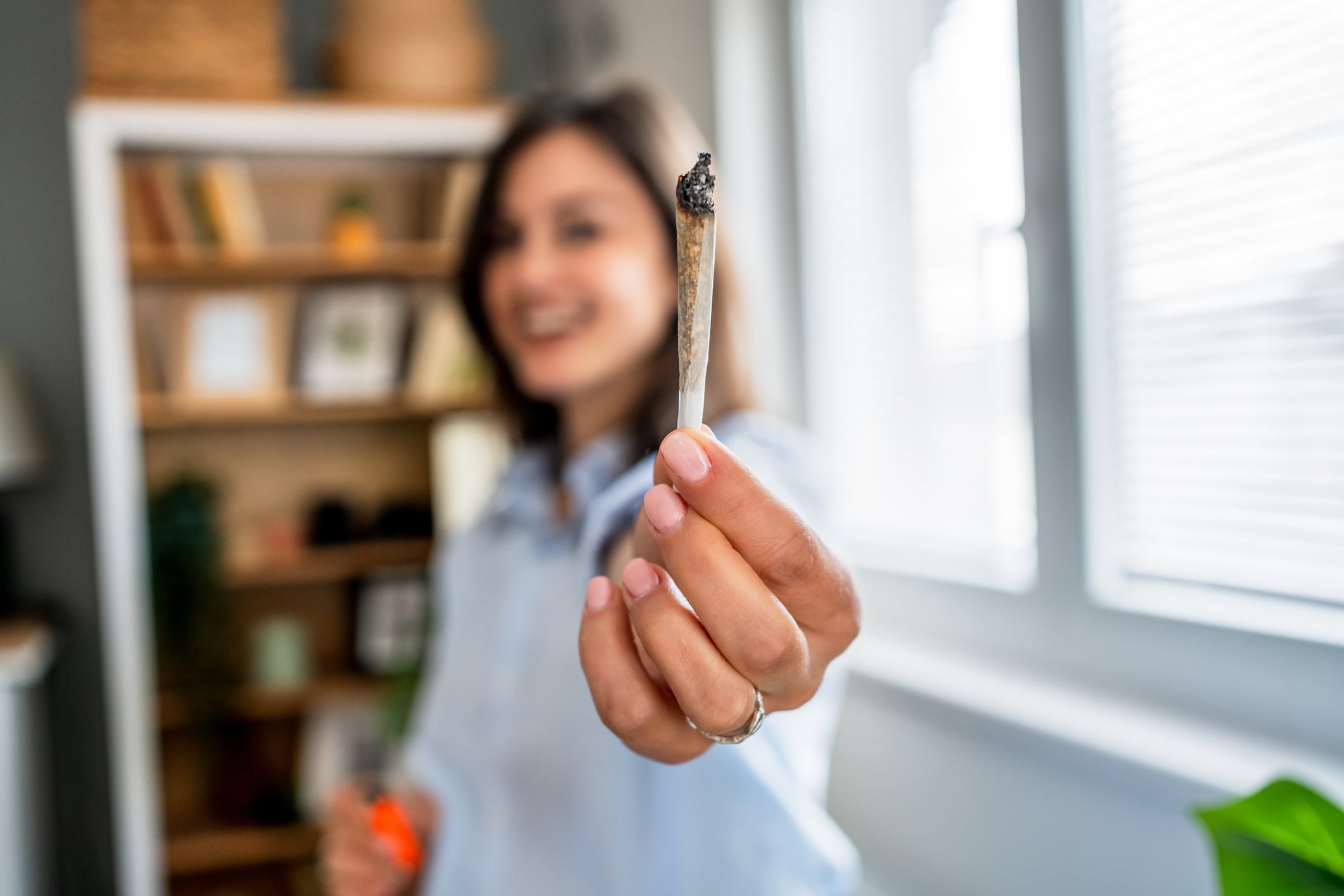
It’s normal to want to protect our children from potential safety threats. But as marijuana becomes more commonplace in homes, with an average of 1 out of every 12 parents reporting regular weed use (and that number may increase with other people, like adult siblings) in the house, we can’t help but wonder: Should playdates involve a weed assessment?
Conversely, if you’re a regular weed user hosting kids in your home, what should you disclose to other parents? Do you tell other parents you consume? Do you ask if they do before your kid goes to their house? What is the etiquette guide for this moment? No one is talking about it, but it’s time we do.
Here’s what experts had to say about talking about cannabis use with other parents, or if you use yourself.
Approach the Conversation From a Safety Standpoint

Clint Salo, DO, a psychiatrist with The Grove Recovery Community in California, says it’s very “reasonable” to ask about weed storage and supervision before a playdate your child is attending. His suggestion to avoid awkwardness or accusation is to simply approach the question from a safety standpoint.
“Most parents appreciate the question when it is framed around safety,” Dr. Salo explains. “If cannabis is in the home, it should be locked away, just like medications or alcohol, especially when other children are visiting.”
Cory Reid-Vanas, LMFT, founder of Rocky Mountain Counseling Collective, gets even more specific and advises parents to develop a standard safety script they use that encompasses cannabis: “Before drop off, have a few safety questions: ‘Do you have a pool, pets, guns, etc.?’ and enfold cannabis use into that conversation,” he suggests.
Don't Overcomplicate the Conversation
Michael S. Valdez, MD, medical director at Detox California, suggests that if your kids attend a playdate or visit a friend’s house and encounter cannabis, the ensuing conversation should be straightforward.
“Parents should lead with honesty and keep the message simple,” Dr. Valdez says. “Kids understand more than we think, and mixed messages tend to stick. If a parent uses cannabis, it helps to frame it as an adult choice with clear limits. Say it plainly and avoid turning it into something casual or funny. Set firm house rules and remind kids not to touch anything that is not given to them directly.”
On a related note, don’t be afraid to check in regularly with your kids and the people they spend time with. Open-ended questions like, “Did you see anything at Timmy’s house that was confusing to you?” can help.
Make It Age-Specific
Reid-Vanas has a very clear and helpful guide to discussing cannabis based on the age of your child, especially if you consume yourself. “Short, factual and consistent information over time is way more effective than one big ‘drugs are bad’ conversation,” he explains. “Parents should not moralize but inform. Kids tune out lectures.”
Here are some age-specific conversation guides you can use:
- Under age 7: “That’s for grown-ups to use only.”
- Ages 7-12: “Some adults use weed, which is legal here but not safe for kids because your brain is still developing.”
- Teens: At this age, be more direct, for instance: “I use it, but the research on teen use is concerning. It can affect your memory, motivation, mental health, and physical health in ways it doesn’t for adults.”
If a teen expresses interest based on your own use or encountering weed at a friend’s house, Reid-Vanas also suggests that you approach the conversation from a choice-centered perspective, rather than simply telling them ‘no.’
For instance, you could say, “We’re asking you to wait until your brain is fully developed.” (Research shows that when setting boundaries this way, teens use weed less, Reid-Vanas notes.) Another strategy, he adds, if you consume yourself, is to own your choice without endorsing it for your teen. “I made this choice. Part of parenting means hoping you make better choices.”
Implement Safety Protocols
No matter which adult is consuming cannabis, yourself or another parent, basic safety parameters need to be in place to protect children. Reid-Vanas starting with the following guidelines:
- Don’t use when you’re supervising children. “Impaired supervision is not supervision,” he points out. “It’s obvious when driving, but it is also when watching them and being able to respond in case of an emergency.”
- Know your own reactions. “Edibles can have delayed, intense effects,” he explains. “Internal rules should be in place when kids are around.”
- Disclose your own use and its safety/storage. “Make it known you are open to questions,” Reid-Vanas says when disclosing to parents..
- Store all cannabis products in a locked, clearly labeled, child-resistant area.
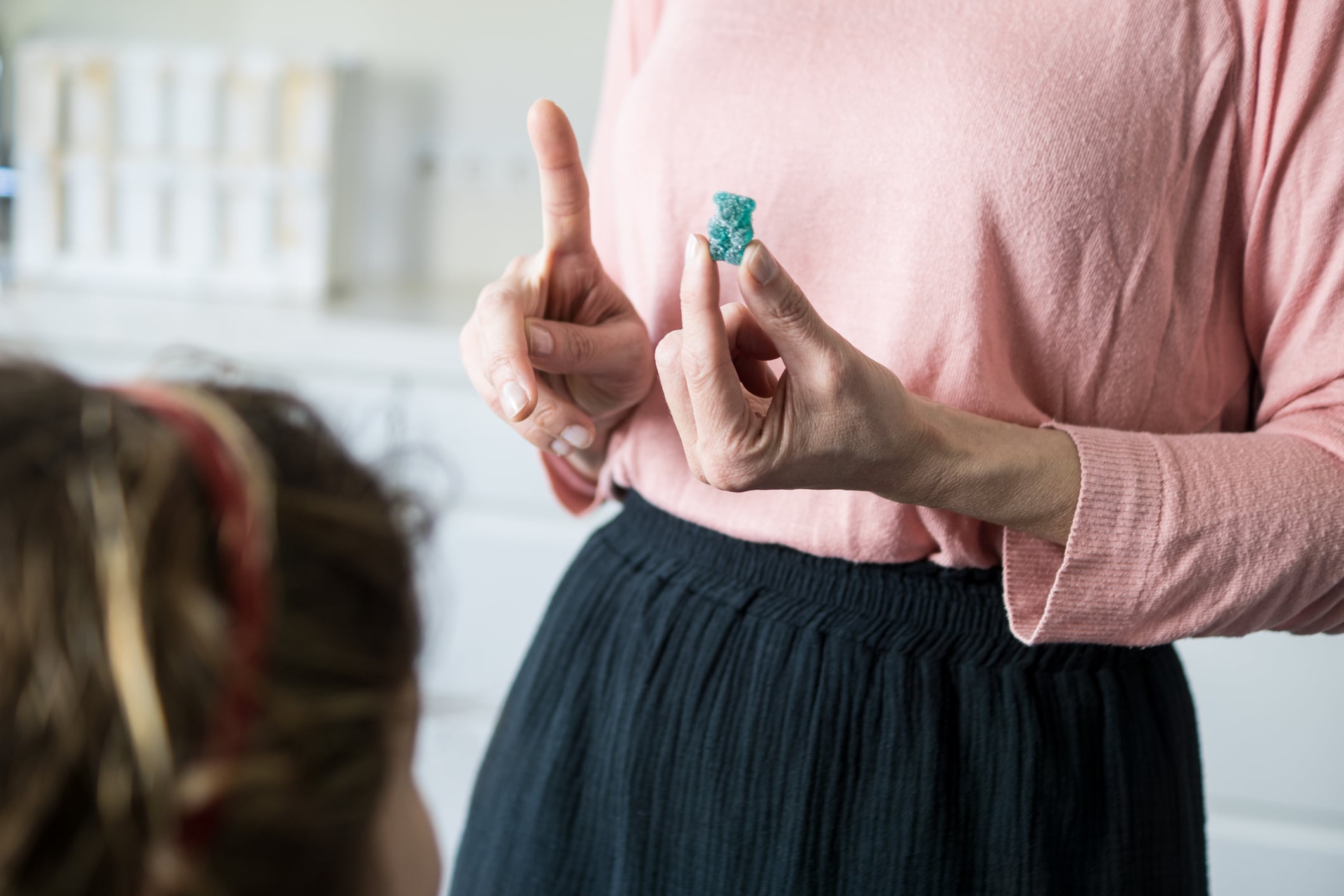
- Be mindful of edibles and treat them like prescription medications.
- Make sure you check the car to remove remnants.
- Know poison control numbers.
- Check state and local laws because there are some legal implications around use near minors.
Last, but not least, Reid-Vanas says that if weed use is affecting your parenting, or the parenting of someone you know, treat it like you would alcohol and seek support. The good thing about parenting is that you never have to do the hard stuff alone.