
Bye, Bye Baby
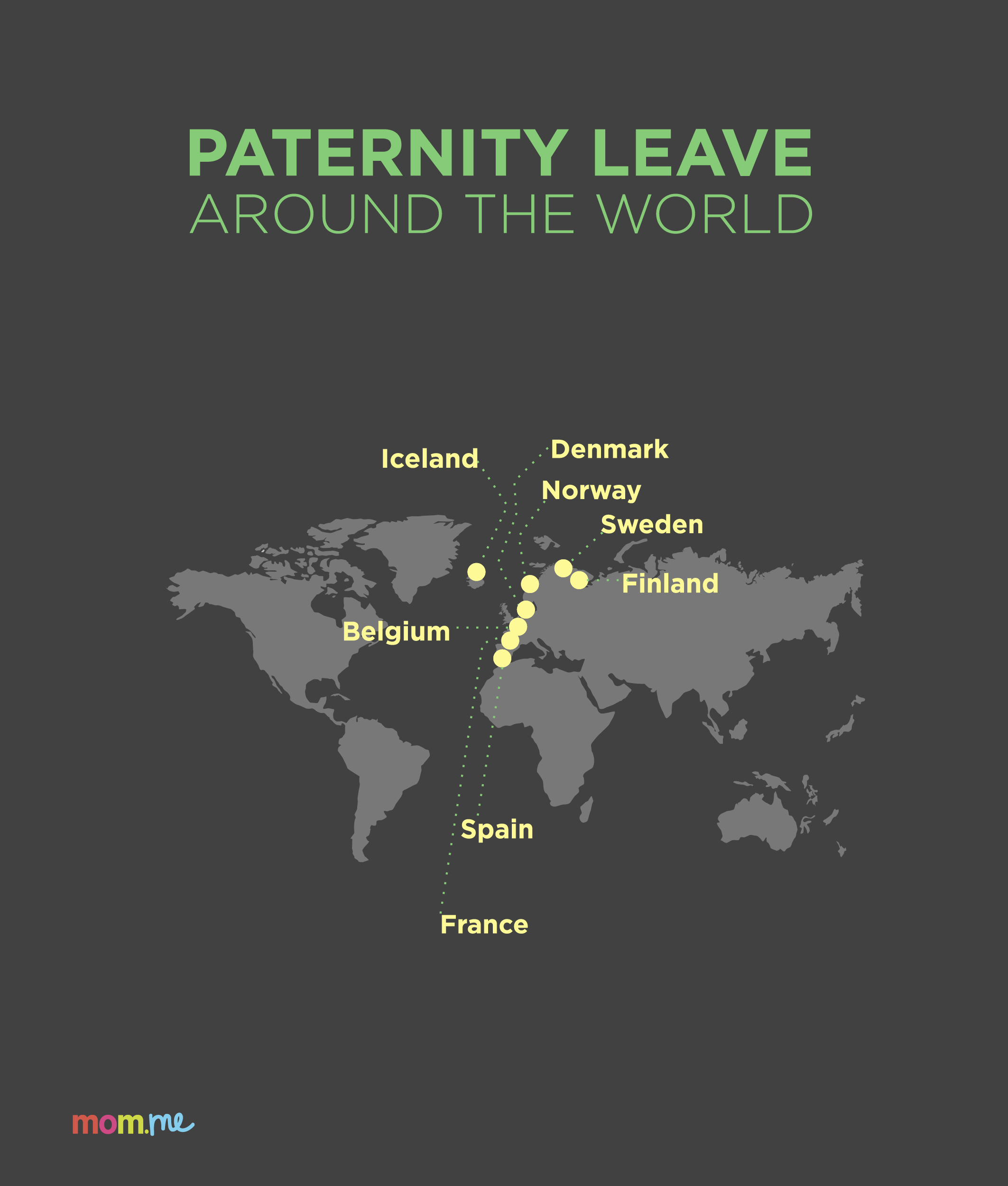
With the United States being the only industrialized nation not to mandate paid maternity leave for new mothers, it comes as no surprise that policies on paternity leave are almost nonexistent. While the Family Medical Leave Act of 1993 guarantees moms and dads their jobs for 12 weeks after their baby's birth, the only states offering paid leave are California and New Jersey, with dads getting 55 percent and 66 percent of their salary covered, respectively, for six weeks.
Even though companies such as Microsoft, Facebook, Pinterest, and Google are offering new dads a range of paid leave time—from four weeks to 17—countries such as England (which offers two paid weeks) and the U.S. are still behind the rest of the world (some much more than others. Here, we've ranked the best paid paternity leave by country, and offer a look at the number of weeks dads are able to take in each. Some will definitely surprise you.
Belgium
When a child is born, Belgian mothers are paid 82 percent of their salary by the social security system for 30 days. After that, they receive 75 percent. In total, they’re eligible for 15 weeks of maternity leave.
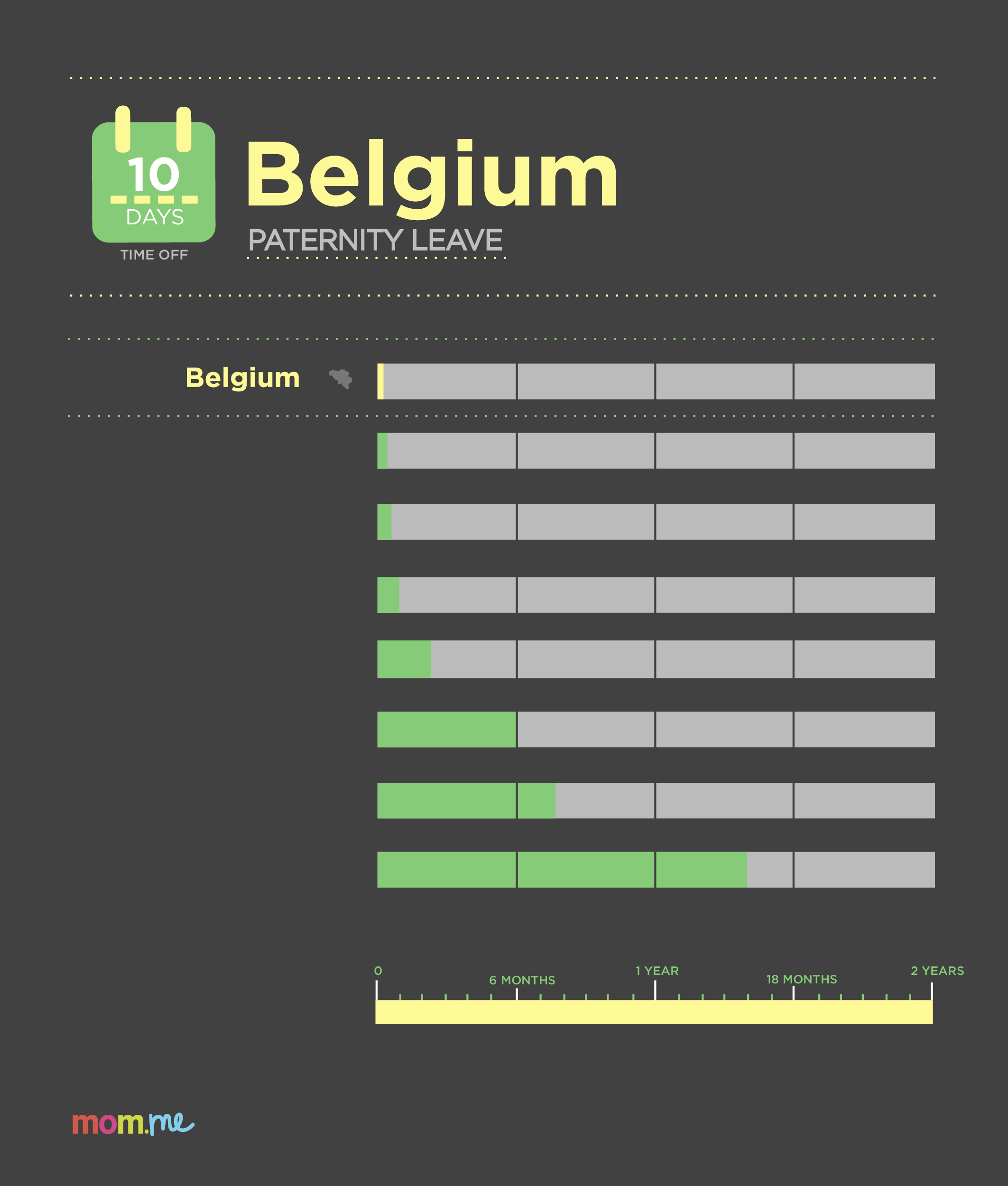
Fathers, meanwhile, have a right to 10 days of paternity leave, which they have four months to take from the time of the birth. Seven of these days are paid for by the social security system, at a rate of 82 percent of their salary.
France
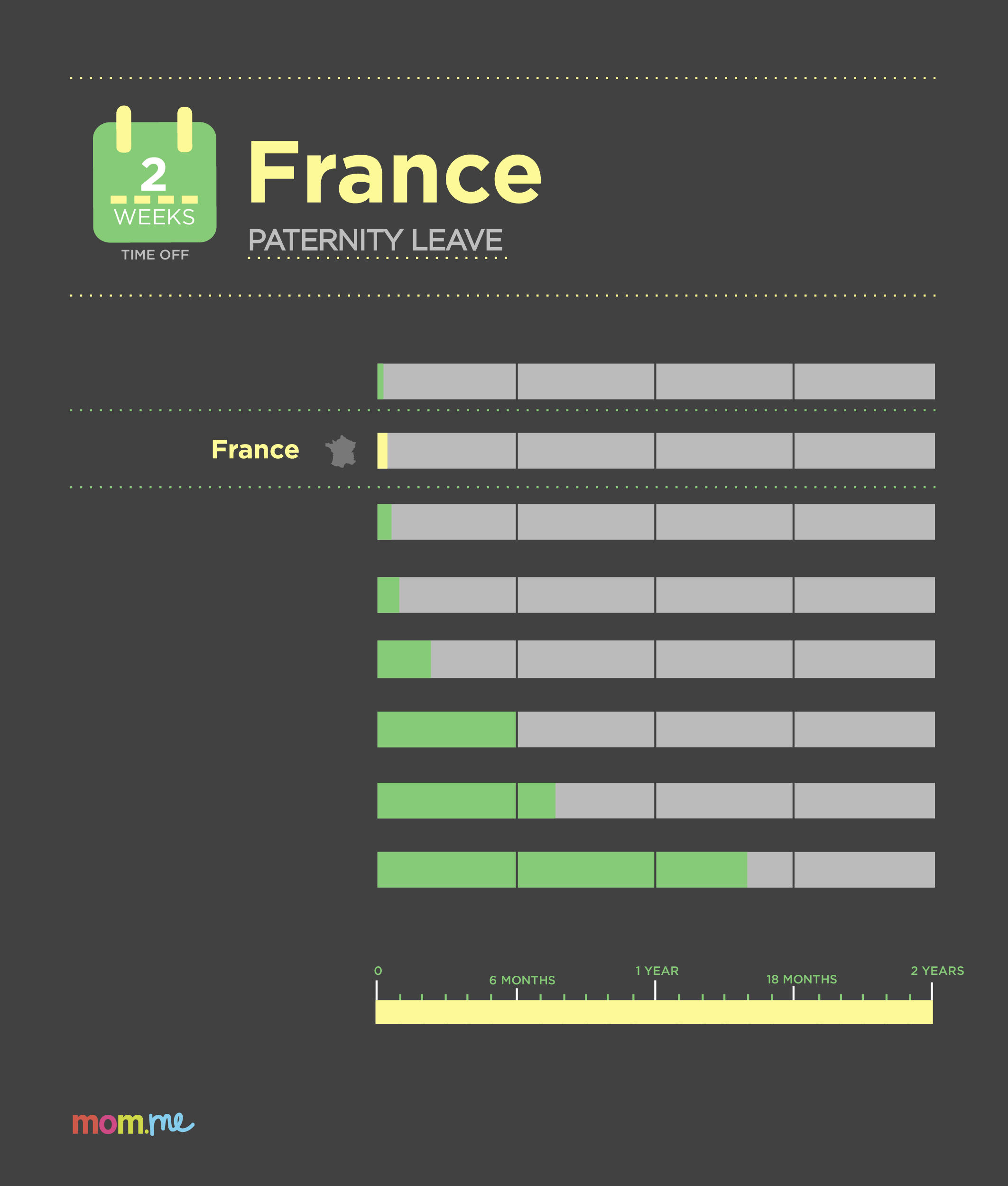
According to the French state health insurance agency, L’Assurance Maladie, the statutory period of paternity leave is 11 days, or 18 days in the case of multiple births. The father has four months to use these days, all of which are paid by the state.
Fathers also receive another three days to cover the time of the birth itself, all paid for by the employer. This compensation is paid regardless of the type of job the father holds, so contract employees, part-time employees and full-time salaried employees are treated the same way.
Spain
Mothers in Spain are entitled to four full months of paid maternity leave. And she can take a full year of maternity leave (without pay) without the risk of losing her job.
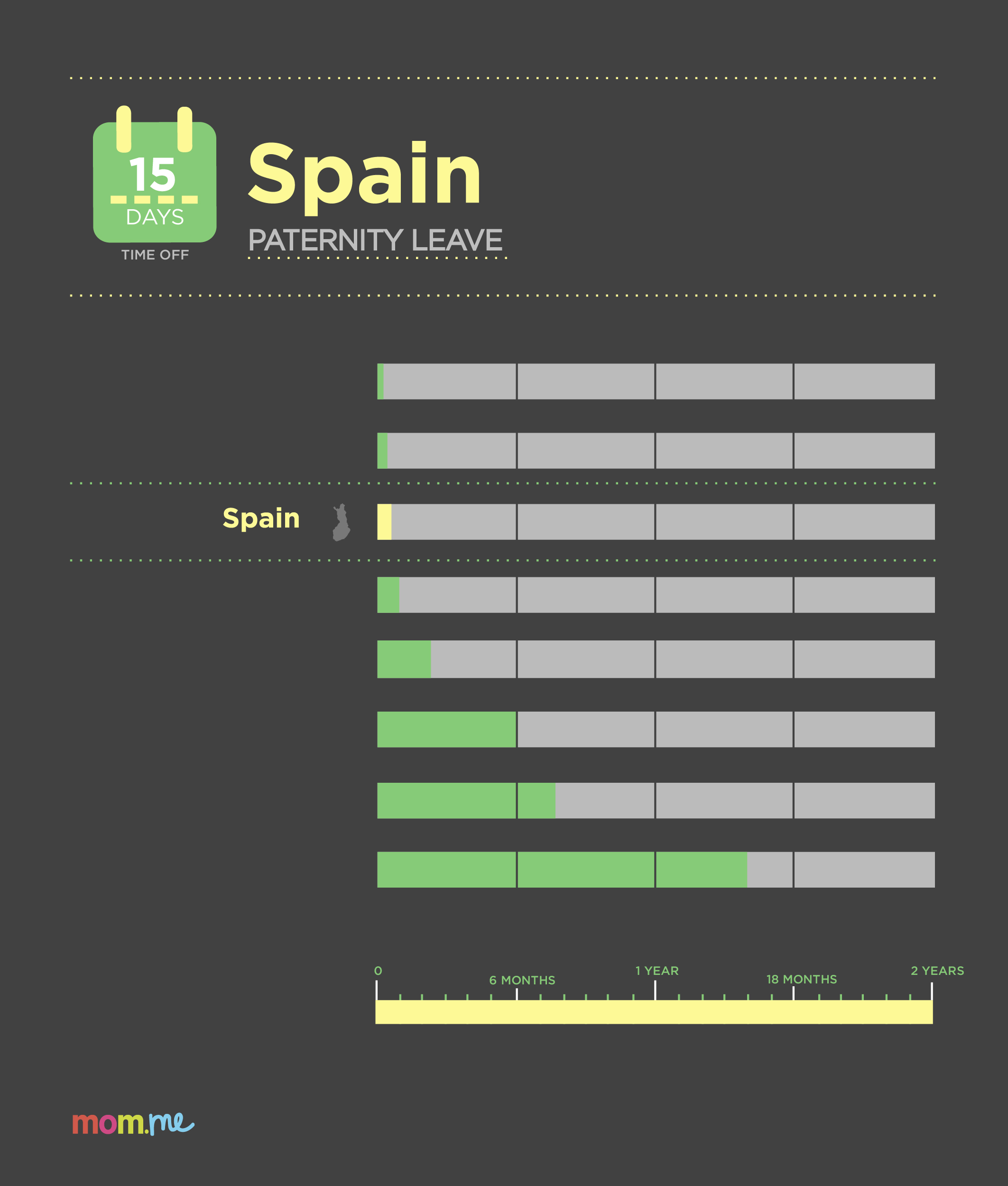
Fathers are entitled to 15 days of paid leave, and more in extenuating circumstances, such as complications arising from childbirth. In 2015, the government of Spain will extend the father’s eligibility from 15 days to 30 days.
Finland
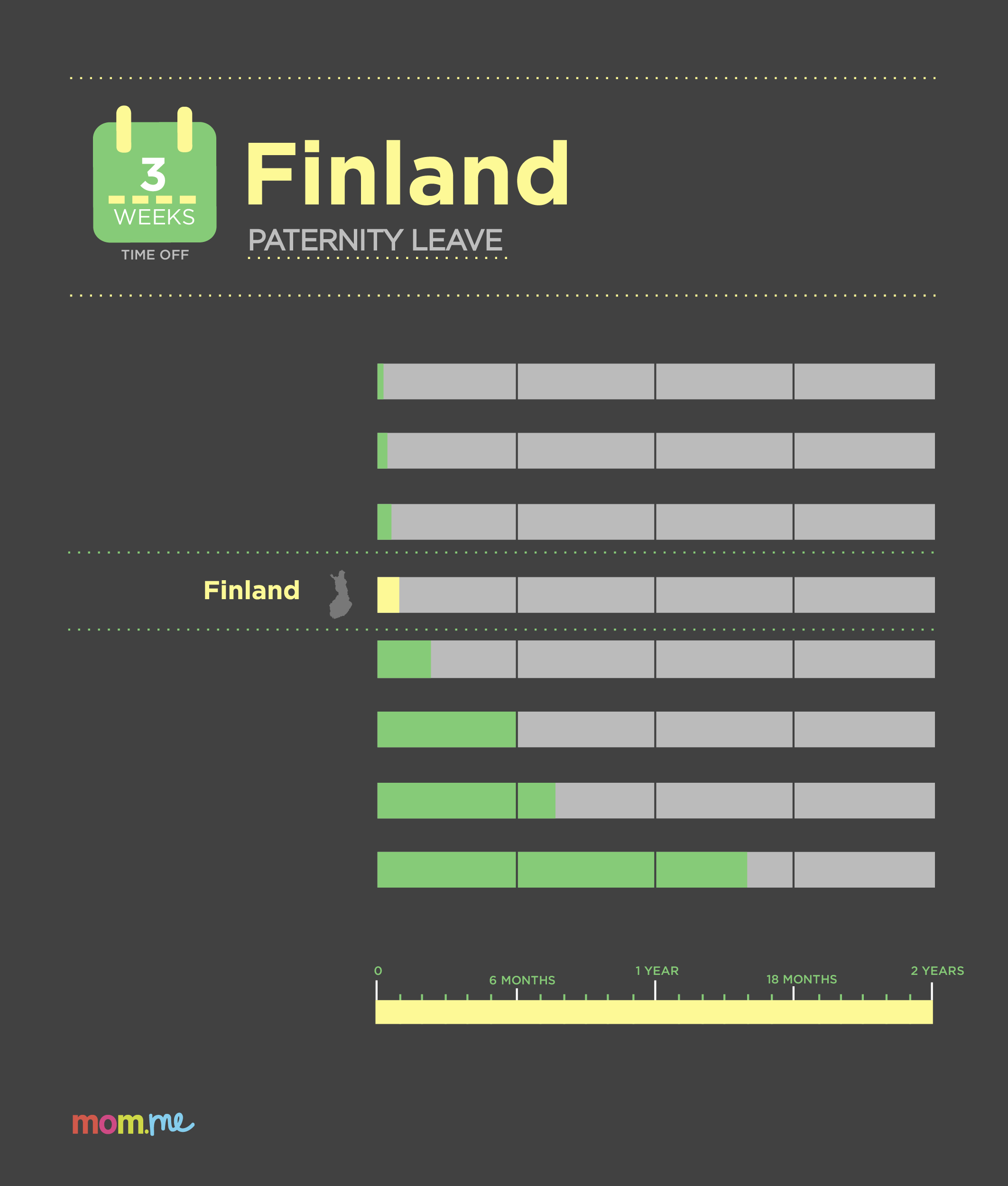
In Finland, fathers of newborns are eligible for three weeks of paternity leave while the mother is also on leave. This also applies in the case of newly adopted children.
The time can be taken all at once, or it can be broken up into pieces, but an allowance is paid for all the time that’s taken either way. According to Finland.fi, these benefits are “society’s way of tempting young fathers to share part of parental leave.”
Norway
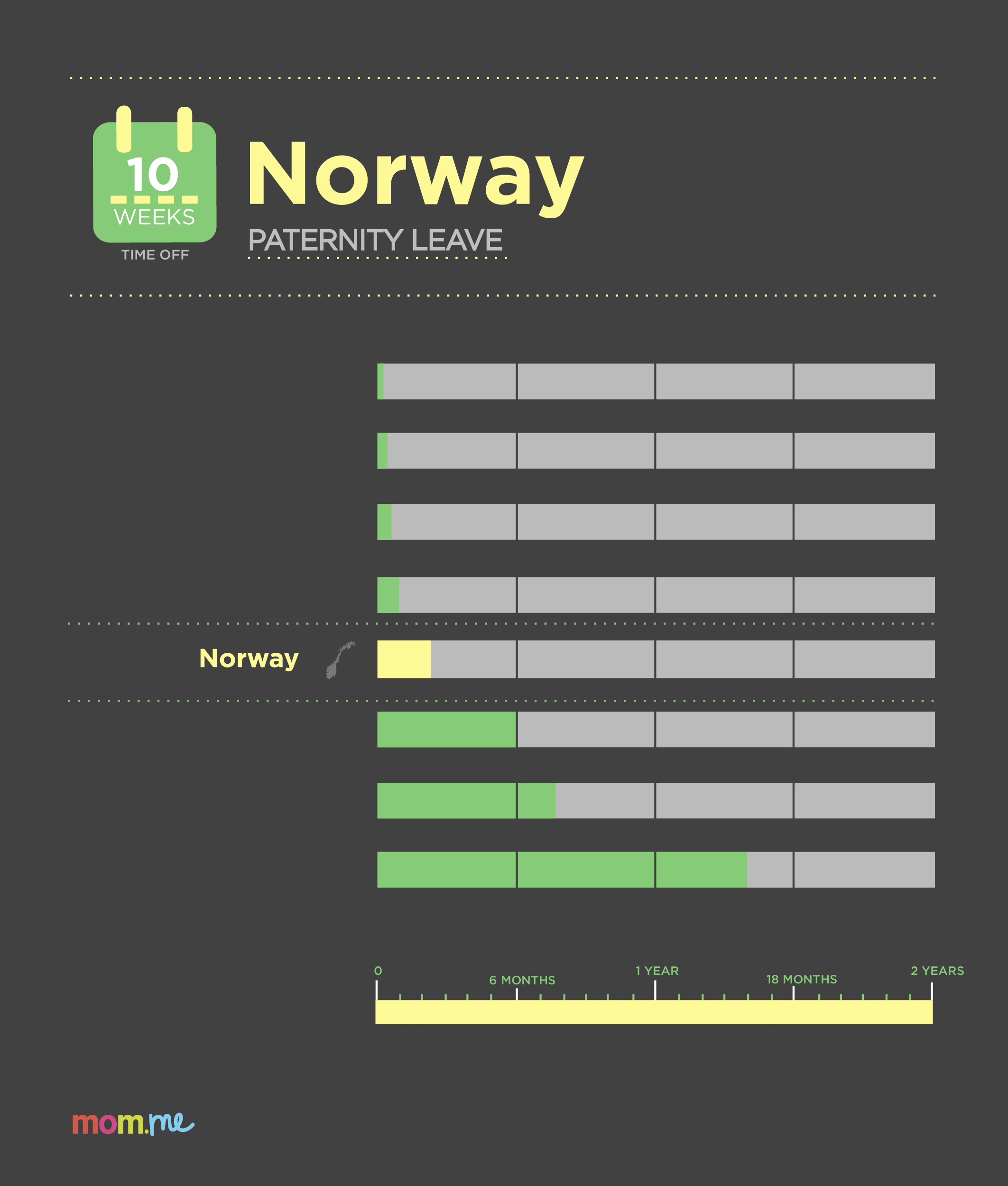
In 1993, Norway became the first country in the world to offer paternity leave. Currently, the nation offers 10 weeks of paid leave to fathers, to be taken all at once or in bits and pieces during the first year of a child’s life.
According to the Ministry of Foreign Affairs, “the aim of the parental benefit scheme is to help parents to combine working life and family life.” And apparently it’s working. “Norway tops European statistics on birth rates and participation of women in the workforce,” the Ministry says on its website.
Iceland
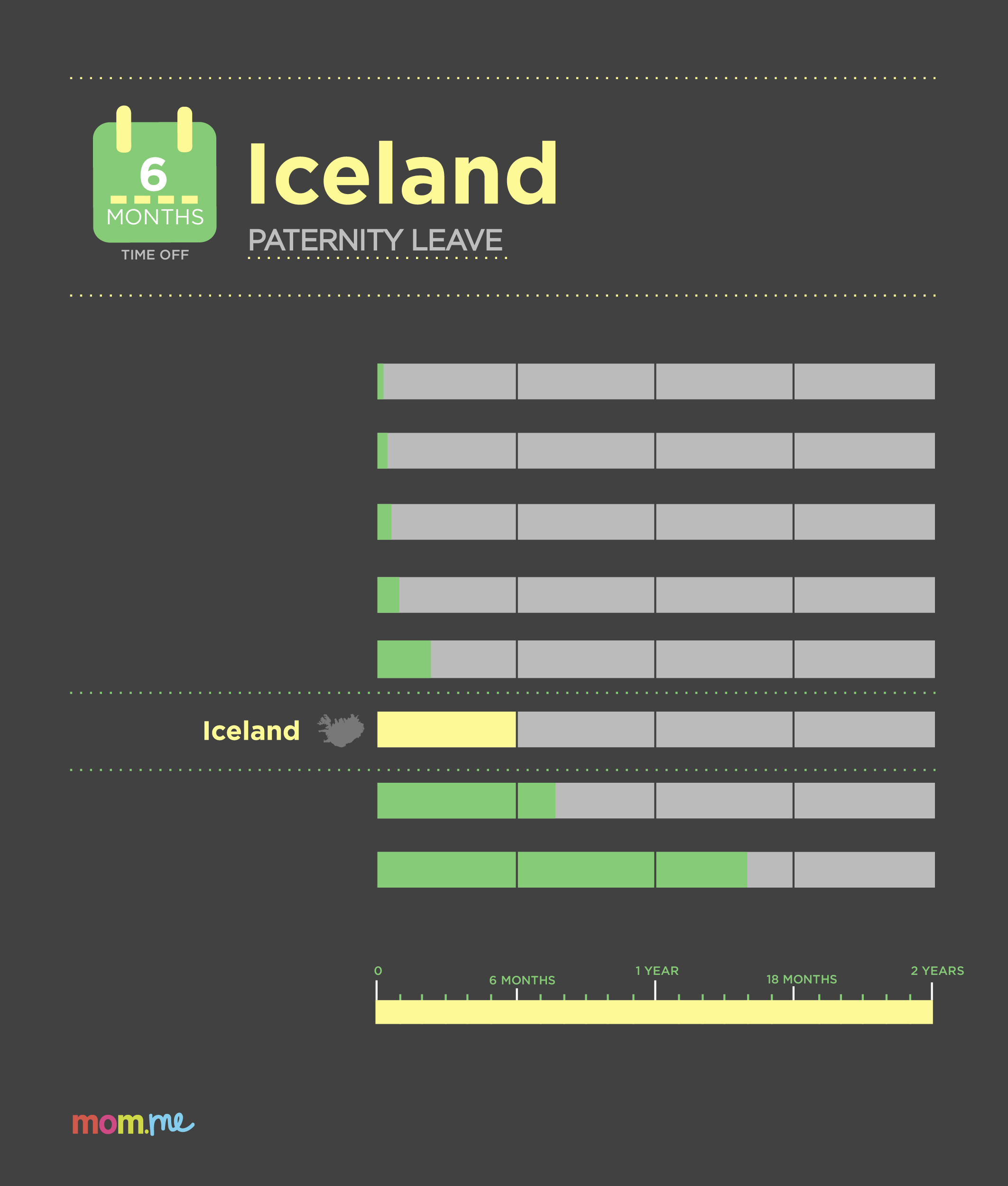
The nation's original paternity leave program (launched in 1998) was scrapped in 2000 in favor of leave rights for both parents, each of whom now receives three months paid in full, plus another three months that can be used freely by either one of them, for a potential of 6 months paid leave for fathers.
Denmark
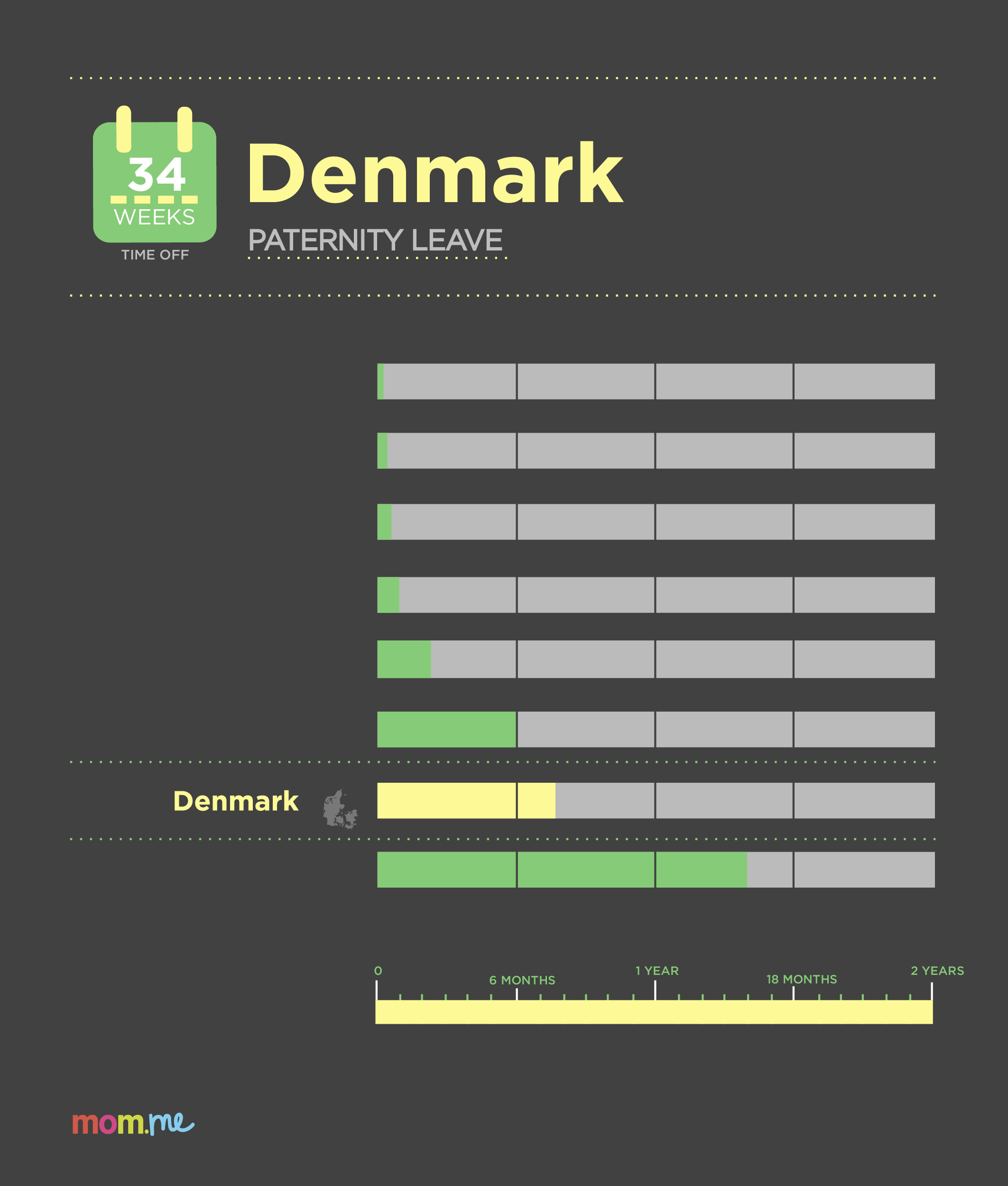
Danish parents are eligible for 52 weeks of leave. The mother receives four of those weeks prior to birth and 14 after, while the father is entitled to two. The remaining 32 weeks are not set aside for a particular parent, and can be split up as they see fit (for a potential of 34 weeks paid leave for the father). Private sector employees are compensated for their time out of the office, but at a rate determined by their employers. Public sector employees, on the other hand, receive their full salaries.
Sweden
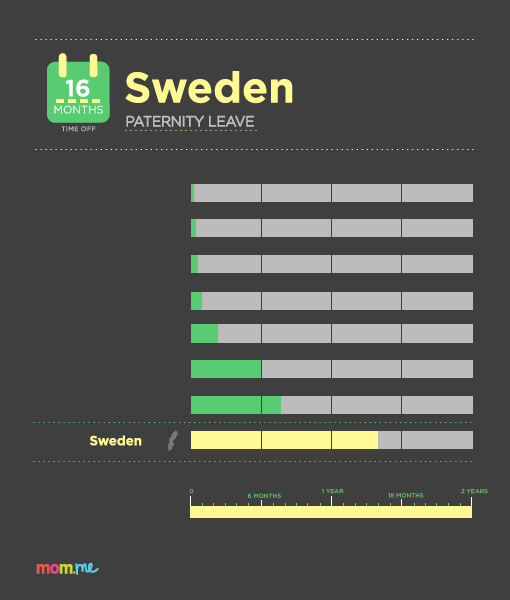
In 2012, the Wall Street Journal characterized Swedish paternity leave benefits as “the most generous in the world,” and it’s not an exaggeration. Parents receive 480 days of paid leave that they can share as they see fit, with 60 days reserved for each. This time can be used in whole or in parts, and can also be used up to 60 days prior to the baby’s due date. When the baby is born, fathers are eligible for 10 extra days of paid leave. According to Sweden.se, these arrangements are “mainly to encourage equality and shared responsibility.”