

Don’t skip the shower

One of the very best things you can do—for yourself and all of your fellow swimmers—is to rinse off quickly before you get in the pool. On average, people have about 0.14 grams of feces on them at any given time—and then there's all the other dirt, grime and germs. Best not to have that swimming around in the pool with you.
Don’t go head first, at first
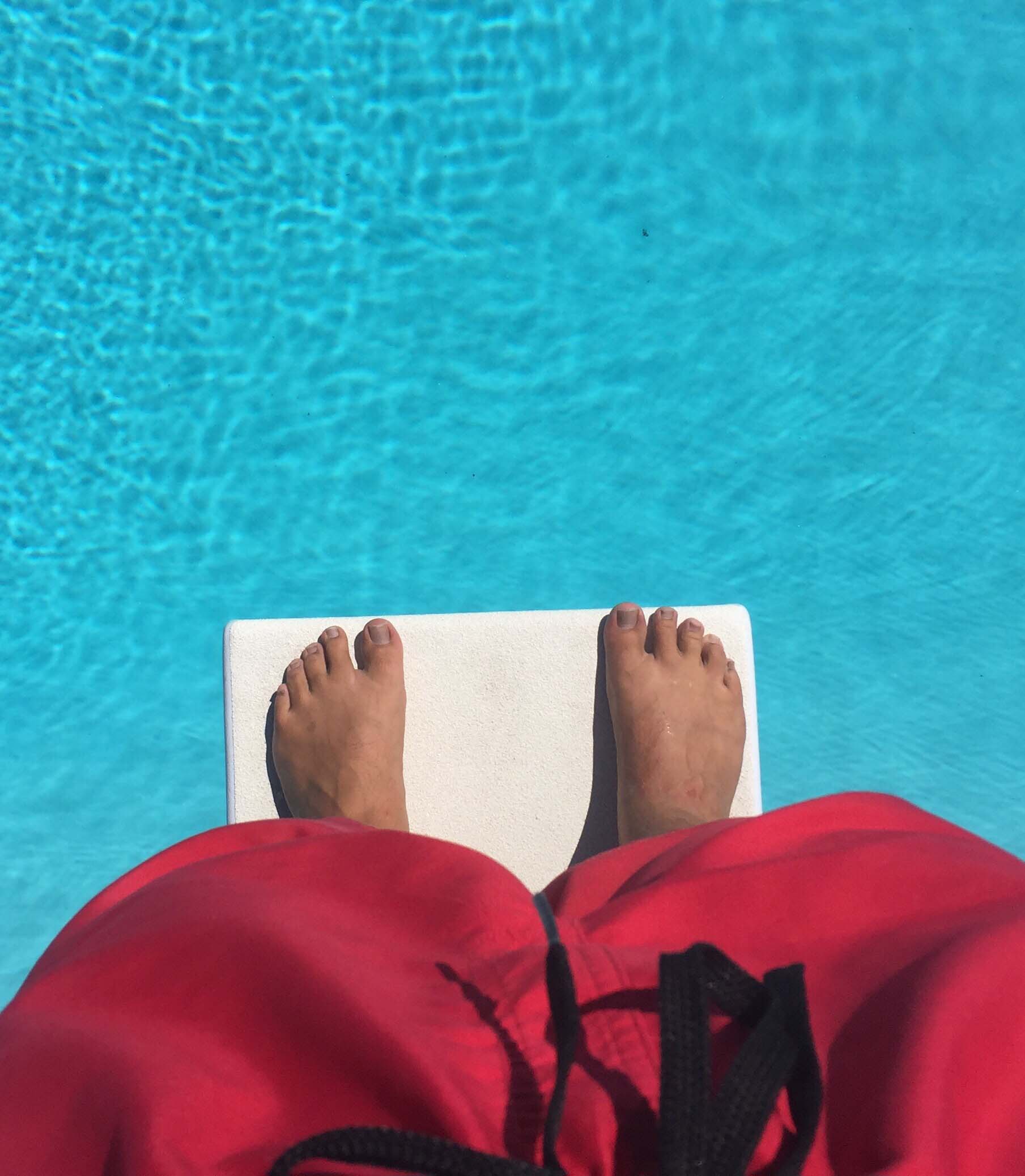
Most diving injuries happen in the pool—and there are serious consequences. It can be hard to judge the depth of water with just your eyes, even for experienced swimmers. Respect "no diving" signs and only go head-first in water that is at least nine feet deep, per the American Red Cross.
No running means no running

Lifeguards and parents alike shout "no running" all day for a reason. Slippery tile and wet surfaces are prime for slips, falls, bumps and bruises—and worse—that go with them.
Chlorine isn’t the problem

That smell is likely chloramine—a chemical irritant produced when chlorine combines with everything you don't want in the water, like urine, feces, sweat and dirt. It's chloramine that makes your eyes red, your throat burn and your skin itch. A well-managed pool shouldn't really smell, say experts.
That said, you do want chemicals and other cleaning systems to help keep water clean and pH-balanced because water-borne diseases and infections are no joke.
C is for Cryptosporidium

Cryptosporidium is a parasite that is chlorine-resistant and can survive in pools for up to 10 days—and cases of "crypto" have been on the rise. The parasite is typically found in diarrhea and it in turn causes diarrhea for anyone unlucky enough to have swallowed or ingested infected pool water. Kids in diapers are often a culprit.
It sounds extreme, but if you or someone you know has had diarrhea, stay out of the water for at least two weeks.
P is for Pseudomonas

Pseudomonas are the bacteria behind two annoying swimming-related infections—hot tub rash and swimmer's ear. It's more common among people who spend a lot of time in the pool.
L is for Legionella

Legionella is the bacteria that causes Legionnaires' disease, a sometimes deadly respiratory infection that causes pneumonia-like symptoms. Legionella is a serious risk factor for older adults and anyone with compromised lungs.
Drowning doesn’t look like it does on TV

The thing about drowning is that it's not the dramatic event you imagine. There's typically not much splashing or screaming. As almost every expert is quick to say, drowning is quick and silent. (Some also add that it's fatal—unless you reach the person in time.)
Lifeguards are awesome, but they aren’t perfect

A lifeguard is charged with watching everyone in his or her area of the pool, not just your beloved people, small or large. It's your job as a parent or buddy to keep an eye on your friends and loved ones.
Last but not least … sunscreen

Skin cancer is, by far, the most common type of cancer. If you're swimming outdoors, a good water-resistant, broad spectrum (UVA/UVB) sunscreen with an SPF of 30 or higher is a must. Apply before you jump in, and reapply again after swimming or every two hours.